

“It’s Not a Big Deal”: Reframing a Diagnosis Many People Fear


Gregory Day isn’t downplaying heart disease—he’s challenging the fear around it, and what happens after the diagnosis.
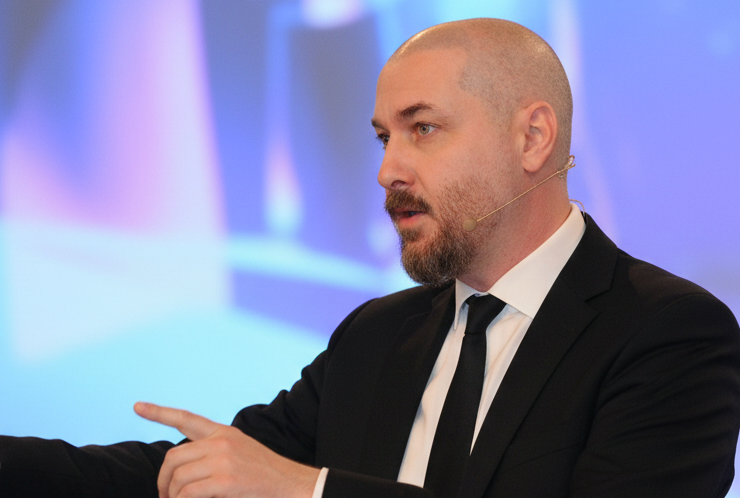
For many, heart disease and high cholesterol get labeled as life-changing diagnoses that spark fear, uncertainty, and limitations.
However, for Gregory “Greg” Day, the experience was quite different.
“It’s no big deal … it really isn’t—and it’s manageable,” he quoted.
Greg’s story offers a unique outlook on his heart disease and high cholesterol. While these are serious conditions, they are also highly treatable, and as Greg mentioned, highly manageable. Sometimes, the biggest challenge isn’t the diagnosis itself, it’s everything that comes before and after it.
A Diagnosis Years in the Making
Early on, Greg knew that heart disease and high cholesterol were serious possibilities. It ran in his family—specifically in his father, who managed the condition with medication.
Still, knowing the risk of heart disease and high cholesterol didn’t necessarily mean acting on it.
“I didn’t want to get a blood test,” Greg admits. “It was just denial.”
Like many people, Greg put off his bloodwork. Life got busy, and the idea of confronting a potential health issue felt easier to ignore than address.
Eventually, Greg decided to take that step. He got his bloodwork done.
The results were clear: extremely high triglycerides, high LDL cholesterol, and even signs of a fatty liver.
“I was immediately put on a statin,” he says.
And just like that, the gray cloud of a potential health issue looming over Greg’s head, the cloud he had been avoiding for years, became something he could actually manage.
Relief—Not Fear
Unlike what many might expect, Greg’s first reaction to his diagnosis wasn’t panic.
It was relief.
“I cannot overemphasize the feeling of relief,” he says.
For Greg, the diagnosis confirmed what he had already suspected—and more importantly, it gave him a tangible solution.
Greg tied his relief directly to being able to attack his health issues. The statin worked wonders for Greg, making him feel “almost no side effects. I don’t sense any… I’m great.”
Within a short time, his numbers improved significantly. A follow-up blood test showed his cholesterol levels had dropped back into a normal range. As Greg saw his bloodwork with less issues and flags, he felt more secure and safe.
“I thought… I’m good now,” he says, “which is not logical.”
That moment highlights a lesser-discussed side of chronic condition management: when treatment works
well, it can sometimes create a false sense of security.
The “Magic Pill” Mindset
While medication for his conditions played a critical role in improving Greg’s health, it also introduced a new challenge—a lack of motivation, most difficult to combat in terms of the food he ate.
“It almost feels like I have a free pass to eat bad food now and not exercise,” Greg mentioned.
Before his diagnosis, Greg believed that if he ever faced a serious health issue, he would naturally adopt healthier habits. Changing his diet, exercising more, and putting less stress on his body and mind. The reality, unfortunately, turned out to be more complicated.
“I thought developing good habits, exercising, and eating well was something I was motivated to do,” he says, “but it seems like I’m less motivated [now] because I have a pill.”
He describes it as a kind of mental shift—one that surprised him.
That mindset, while understandable, is something Greg actively recognizes and is working to change.
“The pill feels like a magic wand,” he says, “but the pill isn’t magic… there’s still work to do.”
Breaking the Stereotype
Another turning point in Greg’s journey came from an unexpected source: a friend, also on statins.
“He’s in fantastic shape—plays tennis, muscular, in his 50s,” Greg says. “You would never think he would have heart issues.”
When that friend openly shared that he was on statins, it changed Greg’s perception of who was at risk.
“It doesn’t just happen to a specific type of person,” Greg said.
It helped Greg realize that heart disease and high cholesterol don’t always look the way people expect. You don’t have to fit a certain stereotype to be at risk.
“He openly admitted it, and I’ve never heard anybody do that before,” he says. “He’s such an inspiration for me.”
That realization ultimately helped push Greg to take action.
From Denial to Responsibility
Today, one of the most meaningful parts of Greg’s routine is also one of the simplest: taking his medication every day.
“It makes me feel like an adult,” he says, “it makes me feel responsible.”
For him, it’s about more than just managing cholesterol levels—it’s about taking accountability for his health.
That shift from avoidance to action has had an impact beyond his diagnosis.
“It’s made me more proactive in other areas of my life,” he says.
To Greg, even small actions, like refilling prescriptions on time or keeping track of medication, reinforce that that sense of control is “sort of like doing laundry… I’m a responsible adult, and this is what I have to do.”
What He Wishes He Knew Sooner
Looking back, Greg says there’s one thing that he wishes had been emphasized more clearly early on: the importance of lifestyle changes alongside medication.
“I really wish the doctor would have expressed the importance of staying fit and cardiovascular health and eating healthy,” he says.
While he was given reading materials, he admitted that wasn’t enough to motivate change. Now, he recognizes that medication is just one part of the equation.
“I kind of turned my brain off to my own health because I took a pill,” he says. “And it’s the wrong attitude.”
A Message for Others
If there’s one message Greg hopes others take away from his story, it’s this: don’t let fear or denial keep you from acting.
“A blood test is not a big deal,” he says.
And the outcome might not be as overwhelming as you expect.
At the same time, Greg encourages people to stay engaged in their health beyond just medication. He envisions a future where he continues to improve his habits, stay active, and take a more proactive approach to his health.
“Being proactive about your health can radically change how you view your future,” he says.

Redefining the Diagnosis
Greg’s story challenges a common narrative around heart disease and high cholesterol.
Yes, they are serious conditions. But they are also highly treatable—and, in many cases, manageable with the right combination of care, awareness, and consistency.
“It’s no big deal… it really isn’t,” Greg says again, “and it’s not a death sentence.”
Not because it doesn’t matter—but because it doesn’t have to define or limit your life.
Instead, it can be the starting point for something else: awareness, responsibility, and a renewed commitment to your health.
Photos courtesy of Gregory Day